
As I’m sure many of you do, I get feeds from web-based business news aggregators, like SmartBrief. What you get on a daily basis is an email with a bunch of headlines and links. If the headline is sufficiently compelling, you click on the link and read the article. That’s it.
The key for the aggregator is to make the headlines as compelling as possible so you’ll click through. How to do that? The answer seems to be this: use numbers!

Take a look at the following headlines, sent in one email, on one morning last week:
The Five Personalities of Innovators: Which One Are You?
5 Leadership Lessons from Capt Kirk
Business Etiquette: 5 Rules That Matter Now
The 5 Qualities of Remarkable Bosses
6 Habits of True Strategic Thinkers
The Five Big Lies about ‘Going Mobile’
How to Pay No Taxes: 10 Strategies Used by the Rich
Why use numbers? Two reasons immediately come to mind:
1. They connote credibility because they appear to be anchored in concrete reality. Let me give you an example of what I mean. A CEO with whom I did executive communications ran for Mayor of a large American city last year and I went to see him do a public, non-televised debate. While most of the content was fluff and most of the other candidates contentless, my former boss came across as much more grounded, real, credible. The way he did that was simple: in response to every question on any issue—education, budget, public services—he incorporated a number into his answer: “There are three things we need to do to begin to turn around our schools.” “Increasing economic development in the southern part of the city will require these three steps.” “If elected, I’ll immediately invoke a six-part plan to reduce the city budget deficit.”
His answers after the numbers weren’t all that different from the other candidates; they all sounded like clichéd, political rhetoric. But by incorporating numbers into his answers, the former CEO came across as having an understanding of the problem not shared by the others (after all, he knew the answer required three actions, not two, not four, three. So he had to know something, right?) His solutions seemed more real, and he seemed less… well, political, and therefore more credible than the others.
In the end, he was the clear winner in the debate, and is now Mayor.
2. They work. You’re reading this entry, aren’t you?
The need to process, add up or understand numbers generates a lot of unique activity in the brain. In fact, there’s apparently a distinct part of the brain believed to be involved in processing numbers: the intraparietal sulcus (IPS), located on the lateral surface of the parietal lobe.
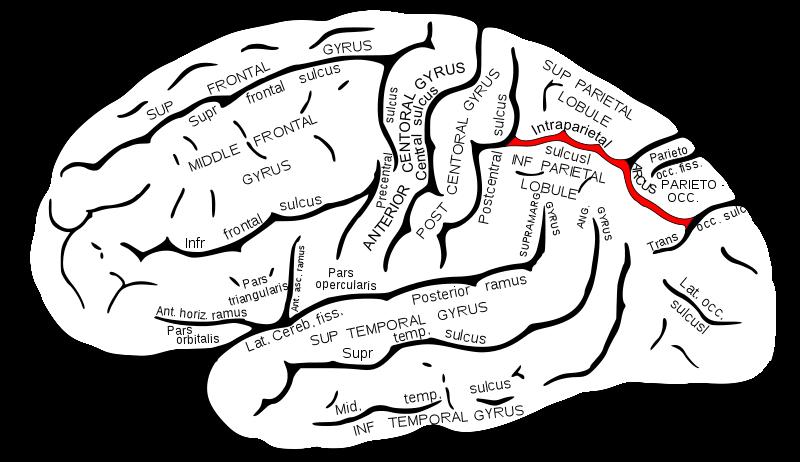
The point is not to find it’s location, or even to pronounce it correctly, but rather simply to note that there is apparently a biological, brain-based basis for the way numbers “hook” us into believing that they are real and grounded in reality.
They work. It’s hard, if not impossible, to ignore their pull.
That’s their advantage. But also our problem. Anything that works so potently is bound to be exploited. And numbers are, to our detriment. In fact, there are at least two good reasons to ignore any headline with numbers altogether:
1. Most headline numbers are totally arbitrary; their only purpose is to grab your attention and make the headline sound scientific, real. In fact, they’re total fantasy. Take a look at those headlines above, for example: “5 Leadership Lessons from Captain Kirk.”

Putting aside the question of whether there are any leadership lessons to be gleamed from Captain Kirk, why 5 lessons? Why not 4? 6? 3? 7? The number itself is completely arbitrary. Or, “The Five Big Lies about Going Mobile.” Are there only “five” big lies? Not 6? 7? 10? Would the sixth lie about going mobile automatically be a “small” lie because it is not one of “The Five Big” ones? Utterly arbitrary. Completely made up by the author to attract your attention. Which leads to the second reason to avoid headlines with numbers in them:
2. You’re being manipulated. Not always, but often. Take these statements:
- Since 1948, whenever Socialist administrations were in power in France, gross national product grew at a rate 6.2% slower than when non-Socialist administrations were in power.
- In the last five years, the premium in return for investing in hedge funds rather than in index funds, after accounting for management and other fees, was only 0.0353%, barely a blip on the radar.
- Math and science scores for female students in developing countries have shown an average annual growth rate of 2.23% over the last 10 years. Scores for male students in developed countries have remained relatively static, with an overall decline in the same period of 1.89%. What does that say about development?
Take a second look at these statements. They could very easily be grounded, truthful, undeniable statements about reality. And maybe they are. But I wouldn’t know, because I made them up! The point here is not, as Mark Twain put it, “There are three kinds of lies: lies, damned lies and statistics.” Rather, it is that is people with “persuasive intent,” that is, people who are trying to sell you something—products, services, even politics and ideologies—understand the persuasive impact of numbers and use them manipulatively. They sound real, and you’re unlikely to take the time to track them down to their source to assess their validity. So you take them as true, whether they are or not.
***
Unfortunately, there is no getting around the ability of numbers to grab our attention and increase our gullibility. That’s what they do, pretty much automatically. Knowledge and awareness can help though, providing something of an inoculation.
The bottom line: when it comes to headlines with numbers, my best advice is: caveat emptor! Reader beware!


 Strategic Leadership Communication
This blog really held my attention – it had a liveliness and much passion, almost indignation. I hope this creates a lot of interest for you, Barry!
Great observations. Womens’ magazine have been using this ploy for years. “Drop 5 pounds in 5 weeks with these 3 easy exercises.” “Look 10 years younger in just 5 minutes.” But “intraparietal sulcus”? Come on! My vocabulary just expanded. Thanks, Barry.
Shirley Robinson
While its true that numbers can be used to play on people’s gullibility, there’s also a reason why (if true) that they are powerful. You wouldn’t make a major purchase without checking your bank account first, and it makes a huge difference to people in India if the projected impacts of climate change lead to a 10 or 50% loss in production! If you hear a number or statistic that doesn’t make sense, that’s reason to go do some of your own research, and I would never base a decision on someone else’s statistics without some serious double-checking!
Wheat production, that is….
I’ve had a number of comments which indicate that readers inferred that I was suggesting that statistics and numbers by themselves were misleading in some way. I apparently was not entirely clear. My focus was on the way numbers were used in headlines, particularly in email news feeds. Most of them have a manipulative intent: they want to get us to be so “hooked” by the headline that we’ll click through and read the full story. Alas, far too few are worth the effort, despite their “gripping” use of numbers in their headlines.
Ok, clarification accepted. I think I’m one of those gullible people who likes to click on headlines with numbers in them! 🙂
another gem from you Barry, thanks! By forcing myself to quantitatively think in numbers, my message does not only _appear_ more thoughtful, but it actually gets further refined and _become_ more profound.
Thanks for the positive feedback, Johan. I’m delighted that you read it, and find it thought provoking.